
5 Fun Ways to Teach Colors at Home
Discover five fun and easy ways to teach colors at home! From scavenger hunts and snack-time learning to art projects, songs, and everyday conversations, these playful activities help children recognize and enjoy colors while building confidence and curiosity.
The Little Nest Playschool
12/1/20253 min read
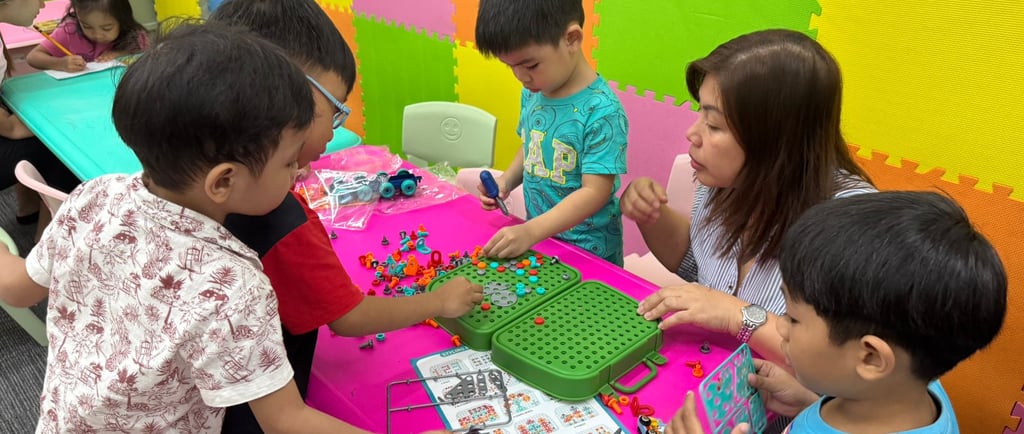
Learning colors is one of the first steps in a child’s early development. At Little Nest Playschool, we know that children learn best when lessons are fun, interactive, and part of everyday life. Colors are everywhere—around the house, outside, and even in their toys—so teaching them doesn’t have to be complicated. With a little creativity, parents can turn ordinary moments into exciting opportunities for learning. Here are five fun ways to teach colors at home, inspired by the playful approach we use at Little Nest.
1. Color Scavenger Hunt
A color scavenger hunt is a simple and effective way to get children moving, exploring, and learning at the same time. Pick one color and ask your child to find objects of that color around the house. Start with primary colors like red, blue, and yellow, then move on to secondary colors like green, orange, and purple.
For example:
“Can you find something red?”
“Let’s see how many blue objects you can spot in the living room!”
Make it playful by giving them a small basket or bag to collect items. Celebrate each discovery with praise, and talk about the objects they find. This activity helps children associate colors with real-world objects, improves observation skills, and builds excitement about learning.
2. Use Food for Color Learning
Meal and snack times can also become fun lessons in color recognition. Foods naturally come in many colors—think strawberries, carrots, blueberries, peas, or bell peppers.
Try activities like:
Sorting different colored fruits or vegetables into bowls.
Asking your child to eat “something green first, then something red.”
Creating a rainbow plate for snack time with foods of different colors.
This approach combines sensory experiences with learning: children see, touch, and taste the colors. It reinforces color recognition while making healthy eating fun. At Little Nest, we often use similar multi-sensory methods during snack and activity times to make concepts stick.
3. Colorful Art Projects
Art is one of the most enjoyable ways for children to learn colors. From painting and coloring to using playdough, art projects allow kids to experiment with color in a hands-on way.
Some ideas:
Provide paper and crayons or paints and ask your child to make a “red picture” or a “yellow garden.”
Encourage mixing colors: What happens when blue and yellow are combined?
Create collages using colored paper, stickers, or fabric scraps.
Art projects promote creativity, fine motor skills, and understanding of color differences and combinations. At Little Nest, children get to explore colors freely in the classroom, which helps them associate colors with fun, expressive experiences.
4. Sing and Read About Colors
Songs and books are a wonderful way to reinforce color learning through repetition and engagement. Many preschool songs focus on colors and are easy to sing along. Similarly, picture books can highlight colors in a story or through illustrations.
Tips for incorporating songs and books at home:
Sing songs like “I See Something Blue” or “The Rainbow Song” while pointing to objects around the room.
Read picture books that emphasize colors and ask your child to identify them in the illustrations.
Turn storytime into a game: “Can you point to all the red things on this page?”
Singing and reading help children internalize color names, improve listening skills, and strengthen memory in a playful way—just as we encourage at Little Nest.
5. Everyday Color Conversations
The simplest and most effective way to teach colors is through everyday conversation. By pointing out colors in your surroundings, you make learning continuous and natural.
Examples include:
While dressing: “You chose the blue shirt today. Blue is your favorite color!”
During walks or errands: “Look at the yellow car!”
At home while tidying: “Let’s put all the green blocks in this basket.”
These small moments, repeated consistently, help children connect colors with real-world objects and contexts. It also encourages language development, as children begin to use color words independently.
Making Color Learning Fun and Stress-Free
The key to teaching colors at this age is keeping it light, playful, and interactive. Children learn best through exploration and repetition rather than formal instruction. Short, engaging activities—just like those we use in Little Nest classrooms—help kids retain information and build confidence in a joyful way.
Parents can also model curiosity: showing excitement when discovering a new color or naming a shade during everyday activities makes learning a shared experience. Consistency, praise, and encouragement go a long way in helping children feel proud of their achievements.
By integrating these five fun approaches—scavenger hunts, food-based learning, art projects, songs and books, and everyday conversations—you can turn your home into a vibrant, colorful learning environment. These methods are simple, flexible, and effective for children aged 2–5 years old.
At Little Nest Playschool, we combine structured lessons, creative play, and interactive experiences to teach colors and other foundational concepts. Using these strategies at home reinforces learning and helps children see that learning isn’t confined to the classroom—it’s everywhere.
📞 Call: 09551559696
💬 Message: m.me/TheLittleNestPlayschoolMainBranch
📘 Facebook: facebook.com/TheLittleNestPlayschoolMainBranch
✉️ Email: admin@thelittle-nest.com
© 2025. All rights reserved.